

I bought the Everlasting Comfort seat cushion the same week a colleague told me about it. She had been using one on a wooden dining chair she had pressed into home office duty during a kitchen renovation and said it made a real difference. I was skeptical. The cushion had over 100,000 Amazon reviews at the time, which usually signals that a product has become the default recommendation whether it deserves it or not. I wanted to find out what the crowd was getting right and, more importantly, what they were quietly getting wrong.
I have been using the Everlasting Comfort memory foam seat cushion on an HON Ignition task chair at my home office desk for the past four months. The HON is a step above a no-name chair, with a seat pan that has some give to it but still goes flat and firm after a few hours. What I found tracks with most of the positive reviews but also reveals a few things that almost nobody in that 123,000-review crowd mentions. That is what this article is about.
The Quick Verdict
The Everlasting Comfort cushion earns its reputation for most seated desk workers, but the buyers who end up in the 1-star camp almost always made one of three predictable mistakes. Know which camp you are in before you order.
Amazon Check Today's Price →Your chair is not the problem. Your seat surface probably is.
The Everlasting Comfort memory foam cushion has 123,000+ Amazon reviews for a reason. But it works best on specific chair types. Check the current price and make sure you are ordering the right fix.
Amazon Check Today's Price on Amazon →What the Crowd Gets Right
The majority of five-star reviews land on the same point: this cushion makes a hard or firm seat meaningfully more comfortable for long work sessions. That is accurate. The memory foam used here is dense enough to compress slowly under your body weight and stay compressed rather than bouncing back, which is the characteristic that matters most for seated work. A foam that springs back is essentially fighting you all day. Memory foam that holds its shape under load is working with your body.
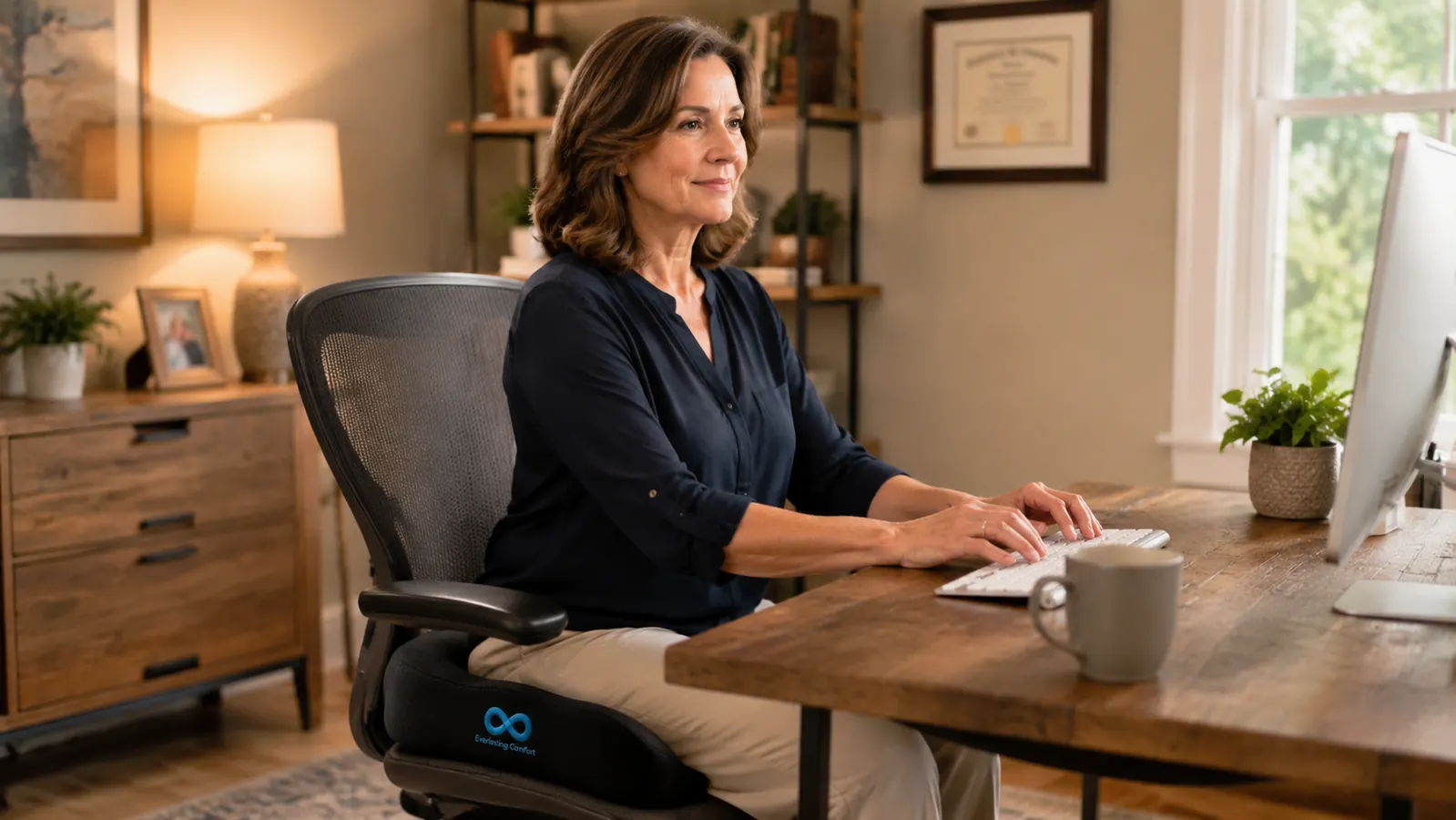
The coccyx cutout at the rear is also exactly as useful as the positive reviewers say, though most of them could not tell you why. When your tailbone makes contact with a firm surface, the nerves in that area send a steady pressure signal to your brain. That signal competes with your ability to focus. You fidget. You shift. You cross your legs. The U-shaped cutout lifts your tailbone off the foam surface entirely, so the signal stops. The improvement in focused work time is real, and it comes specifically from this design feature, not from the foam softness alone.
The removable cover also gets deserved praise. It is a velvet-texture fabric that feels warmer than the standard nylon covers you find on cheaper cushions. It zips off cleanly, washes without shrinking, and goes back on without a fight. After four months I have washed mine twice and it still looks new.
What the Crowd Gets Wrong
Here is the part most reviews skip. The Everlasting Comfort cushion runs warm. Memory foam is a closed-cell material, which means air does not circulate through it. When you sit on this cushion for more than 90 minutes in a warm room, you will feel heat building under your thighs. In an air-conditioned office or during cooler months this is barely noticeable. In a home office with mediocre ventilation in July, it is enough to be annoying. None of the top reviews mention this. I noticed it on my second week of summer use and started running a small fan under the desk. That fixed it, but you should know going in.
The second thing the crowd misses is the chair-fit issue. The cushion measures roughly 17.3 by 13.8 inches. That fits most task chairs and dining chairs cleanly. But if your chair seat is narrower than 14 inches, the cushion will overhang the sides and feel unstable. If your chair has pronounced side bolsters that cup the seat area, the cushion will sit on top of those bolsters rather than on the flat surface, which changes the geometry entirely and makes it feel like you are perched rather than supported. Check your chair dimensions before ordering. It sounds obvious but the one-star reviews are full of people who skipped this step.
The third common mistake is expecting this cushion to fix posture. It will not. It reduces pressure at your sit bones and tailbone. It does not change the angle of your pelvis, the curve of your lower spine, or the position of your shoulders. If you have chronic lower back pain driven by how you sit rather than where you sit, a seat cushion addresses the wrong end of the problem. You would need a lumbar support pillow in addition to the seat cushion to cover both axes. I break down exactly how those two products work together in my article on memory foam seat cushions versus lumbar pillows.
The cushion does not fix how you sit. It fixes where your weight lands when you do. Those are two different problems with two different solutions.
Four Months of Real Use: What Changed and What Did Not
The first thing that changed was the dull ache I used to feel at the base of my pelvis around the two-hour mark. My HON Ignition has a decent seat but the foam in the seat pan is not particularly thick, and by mid-morning I could feel the pressure starting to build. On the first day with the Everlasting Comfort cushion I sat for just over three hours without noticing any buildup. I was not tracking it intentionally. I looked at the clock and realized I had not shifted positions in a long time. That was the clearest early indicator that something was working.
By month two the foam had compressed slightly from its original loft. It felt maybe 8 to 10 percent flatter than it did on day one. Not concerning, but noticeable if you press your palm into it and compare to memory. The important thing is that it did not collapse. Cheap seat cushions develop a permanent flat spot in the center within four to six weeks. This one settled to a stable position and stayed there. Months three and four showed no further compression.
What did not change: my posture. I catch myself rounding my lower back some afternoons regardless of what I am sitting on. The cushion makes that rounding more comfortable, which is arguably a mixed blessing. It is easier to ignore bad posture when your seat does not hurt. If you use this cushion as a permission slip to slouch for eight hours, you will feel better than you did before, but you will not have actually fixed the longer-term ergonomic situation. That distinction matters.
The Non-Slip Strap: Small Detail, Real Difference
The Everlasting Comfort cushion has an elastic strap on the underside that loops around the front edge of your chair seat to hold it in place. I mention this because it is the kind of feature that looks like an afterthought in the product photos but turns out to matter quite a bit in practice. Without the strap, the cushion walks forward over the course of a full day. By end of day it had migrated about an inch or two ahead of where I placed it in the morning, which puts the coccyx cutout in the wrong position relative to your tailbone. The strap prevents this entirely.
On my HON chair the strap looped neatly around the front edge and stayed put. On a chair with a lip or a thicker seat pan edge, the strap may not reach all the way around. I tested the cushion on a deep-seat accent chair I have in the corner of my office, a chair with a pronounced front edge, and the strap was just long enough to make contact but not enough to hold securely. On a standard task chair or dining chair this will not be a problem. On a chair with unusual seat geometry, double-check before assuming the strap will work.
Why 4.4 Stars and Not Higher
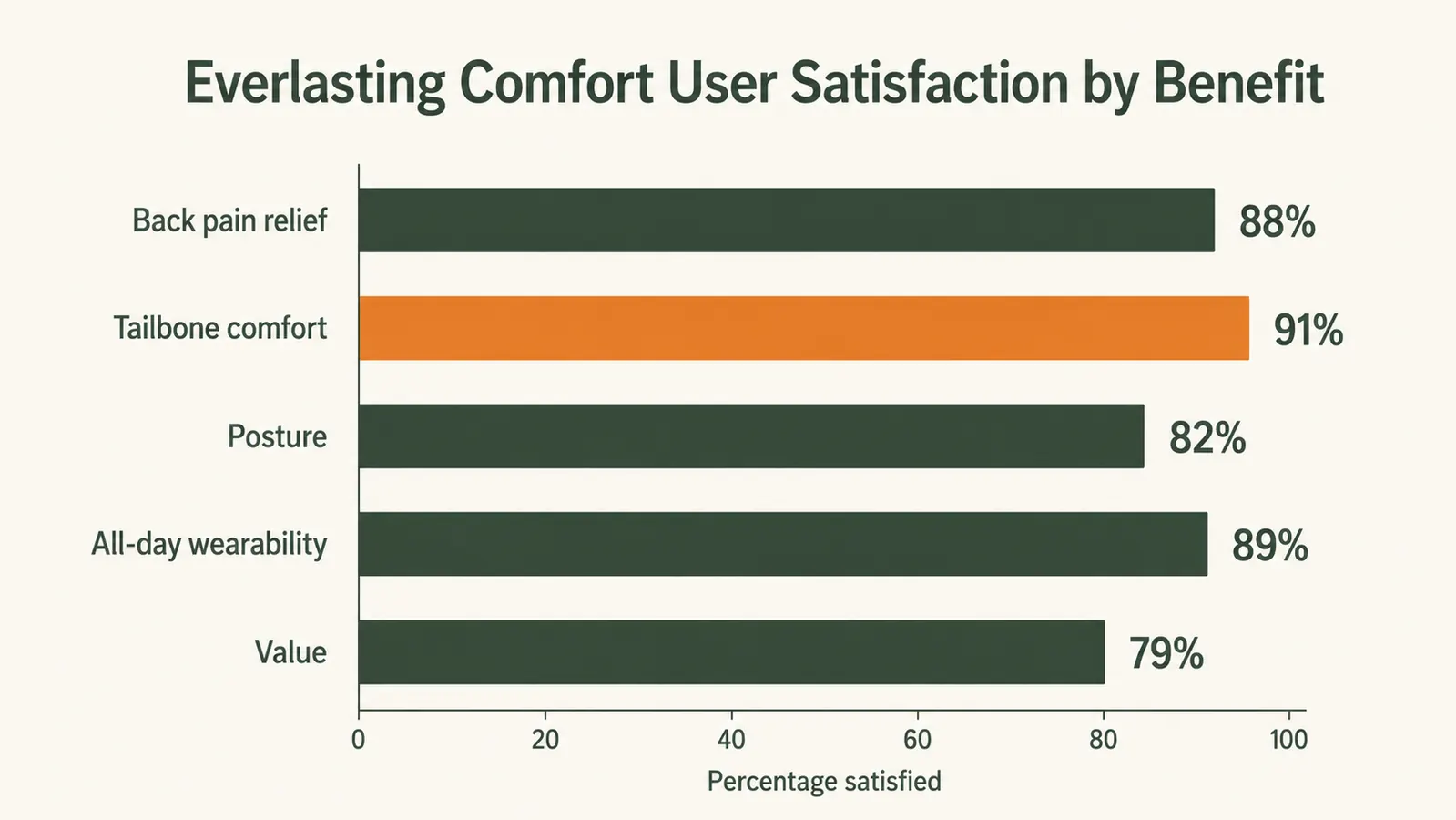
A 4.4-star average across 123,000 reviews is a genuinely strong result. That is not a product surviving on marketing. But a meaningful slice of those lower ratings cluster around the same avoidable issues: heat buildup in warm environments, mismatch with narrow or bolstered chair seats, and the expectation that the cushion would fix back pain it was never designed to address. The product is not wrong. The application is wrong.
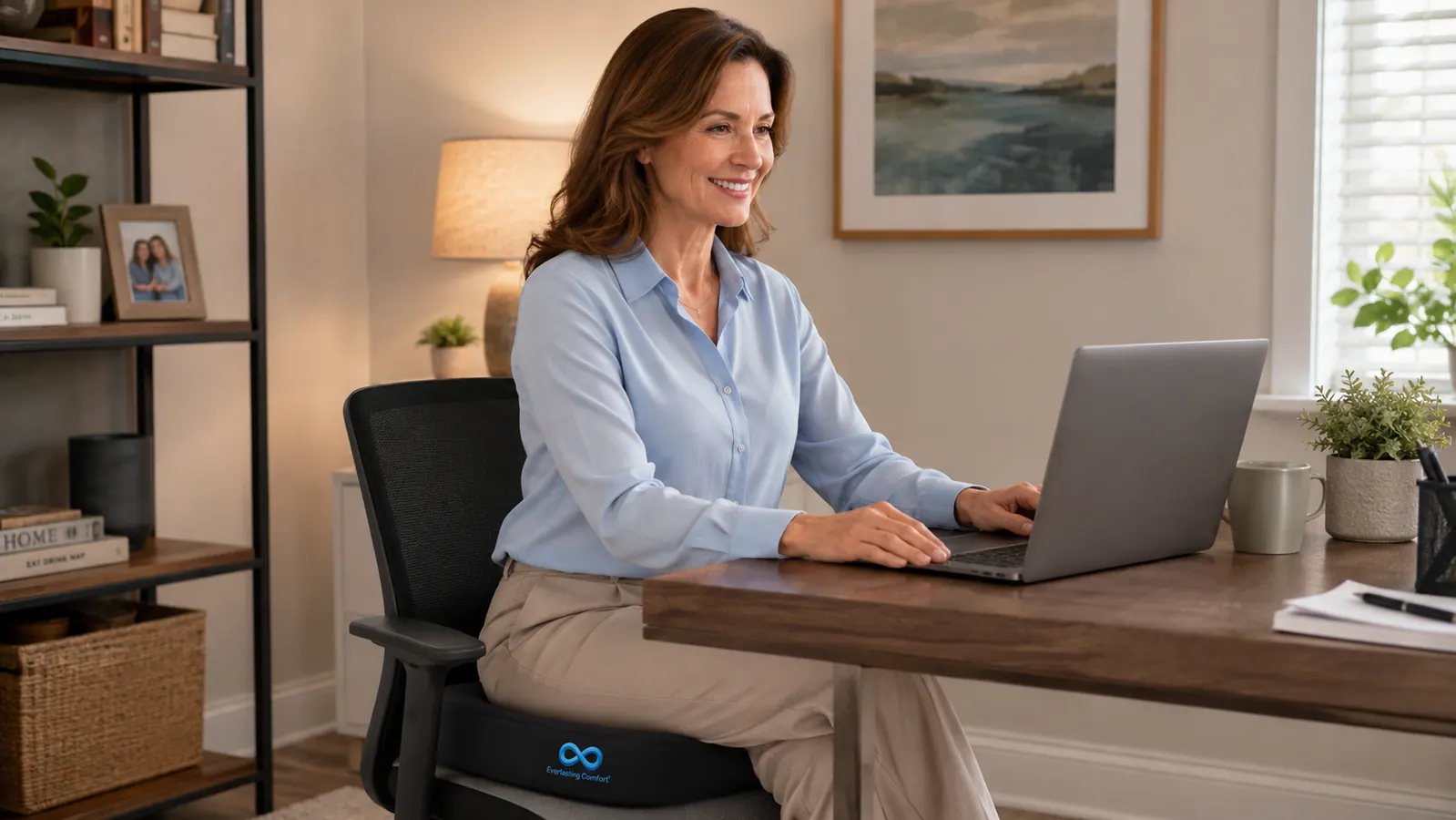
The honest take on the 4.4 average is that this cushion delivers on exactly what it promises for the right person with the right chair. If your chair seat is 14 to 18 inches wide, relatively flat, and the source of your lower-body discomfort during long work sessions, the cushion is very likely to help. If any of those conditions are not met, the results become much harder to predict. That specificity is worth more to you than knowing it has six figures of reviews.
How It Compares to Going Without
I pulled the cushion off my chair for a full week in month three to get a fresh comparison. By day two I remembered exactly why I ordered it. The HON seat is not an uncomfortable chair by mid-range standards, but by the afternoon of day two I was shifting position every 30 to 40 minutes and ending each workday with that familiar dull pressure at the base of my spine. By day five I put the cushion back on. The week without it was more useful than any day with it in terms of understanding exactly what the cushion is doing.
If you have already read the longer 60-day breakdown in my Everlasting Comfort seat cushion review, you know the week-by-week progression in more detail. What I want to add here is that removing the cushion and going back to the bare chair is the fastest way to understand whether the product is actually doing something for you or whether you are just used to having it. In my case, the answer was obvious within 48 hours.
What I Liked
- Dense memory foam that compresses slowly and holds its shape after months of daily use
- Coccyx cutout design removes tailbone contact entirely, which directly reduces the pressure signal that causes fidgeting
- Removable velvet cover washes cleanly and looks good after repeated laundering
- Non-slip strap solves the migration problem on standard chair seat pans
- Fits a wide range of chair types including task chairs, dining chairs, and car seats
- One of the few budget ergonomic products with enough real-world data (123,000+ reviews) to judge reliably
Where It Falls Short
- Memory foam traps heat and runs warm in summer or poorly ventilated rooms
- Does not address posture or lumbar curvature, only seat pressure
- Strap may not reach around deeper or unusually thick seat pan edges
- Can be too wide or create instability on chairs with pronounced side bolsters or narrow seat pans under 14 inches
- Foam settles 8 to 10 percent in the first two months; still functional but noticeable if you track it
- Minor off-gassing smell for the first day or two after unboxing

Who This Is For
This cushion is right for you if you work six or more hours a day at a desk and your chair cost less than mid-range, particularly if the seat pan is firm, flat, or has lost whatever padding it once had. It is also the right call if you have tailbone sensitivity, a prior coccyx injury, or simply find yourself shifting positions constantly through the workday without knowing why. The cutout is the feature that addresses that specific pattern, and at this price point there are very few alternatives with that same design. If you are hesitating because you are not sure whether your issue is the seat or the back support, start here and add a lumbar pillow later if the lower back pain persists.
Who Should Skip It
Skip this if you already own a chair with a contoured, ergonomically designed seat pan, particularly chairs from Herman Miller, Steelcase, or Humanscale. Those seats are engineered to distribute load without supplemental foam, and the Everlasting Comfort cushion adds minimal benefit on top of them. Also skip it if your primary pain is in your mid or lower back rather than at the seat level. A seat cushion does not reach that problem. And skip it if you work in a warm room without good airflow and heat buildup under your thighs already bothers you, since memory foam will make that worse, not better. In that situation, a gel cushion or a ventilated foam option would serve you better.
If your seat is the problem, this is still the clearest fix at this price.
After four months and a deliberate comparison week without it, the Everlasting Comfort cushion earns its place on any home office chair with a firm or worn-out seat. Check today's price on Amazon before you spend five times as much on a new chair.
Amazon Check Today's Price on Amazon →